Could Humans Really Live on Mars?
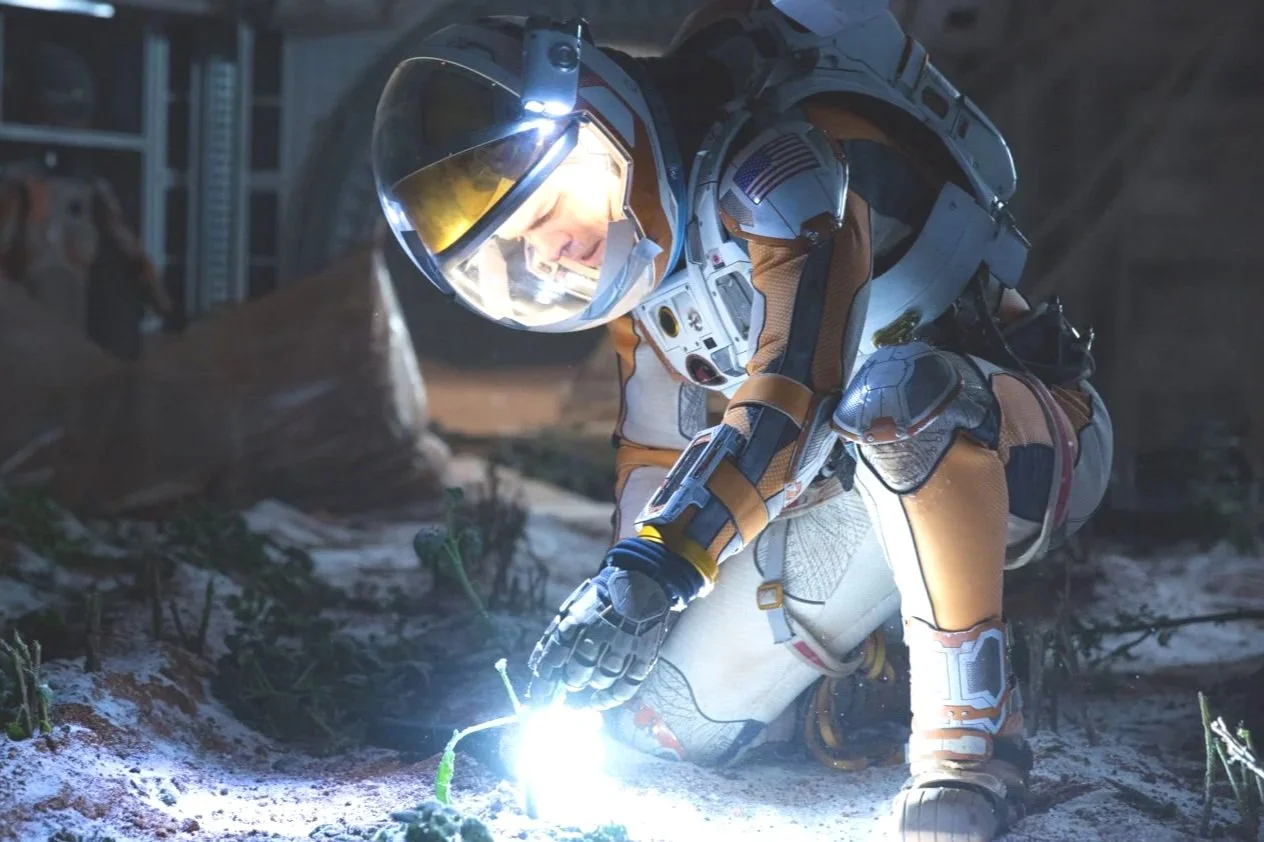
If you have seen The Martian, you may have been curious as to whether human life is possible on Mars. The movie has astronaut and botanist Mark Watney being stranded alone on the planet, and finding ways to survive until his crew comes back. He grows potatoes, creates water, and solves problem after problem using just his mind and science. Not all is accurate in a documentary sense, but at the same time, it does pose an interesting question: can humans actually survive on Mars?
At first glance, Mars may seem like an uninhabitable place. The average temperature appears to be around -80°F (-62°C), there is little or no oxygen to breath, and the planet's atmosphere is less than 1% as dense as that on Earth. A thin atmosphere means Mars has very little air pressure and almost no insulation. Because of this, it cannot trap much heat, liquid water cannot easily stay on the surface, and there is much less protection from harmful radiation. Without a spacesuit, a person would quickly suffocate, which is not ideal and desired. Mars also has huge dust storms that can cover large areas of the planet and sometimes last for weeks. The wind is not as strong as it looks in movies because the atmosphere is so thin, but the dust itself could block out the sun, damage equipment, and make solar power far less dependable. Even dust could be a serious survival problem, even for a future colony on Mars.
However, even with these difficulties, space engineers argue that humans could perhaps live on Mars in the future. The key problem is not getting there, but maintaining a self-sufficient living system.
The essentials that humans need to survive include oxygen, water, food and shelter. The water is already on the planet in the form of ice at the poles, and underground. Research is being done on how astronauts will be able to extract the water and convert it into a usable form to drink, farm and fuel for rockets.
Food also poses a problem. It would be very expensive to bring sufficient food supplies from the Earth over such a long flight, so we would have to produce our own food once on Mars. This is something that Mark Watney did in The Martian, but it would be a far more difficult process in reality. The soil on Mars has dangerous chemicals known as perchlorates, which would need to be neutralized before growing crops. Temperature, water, and atmosphere regulations would also need to be established.
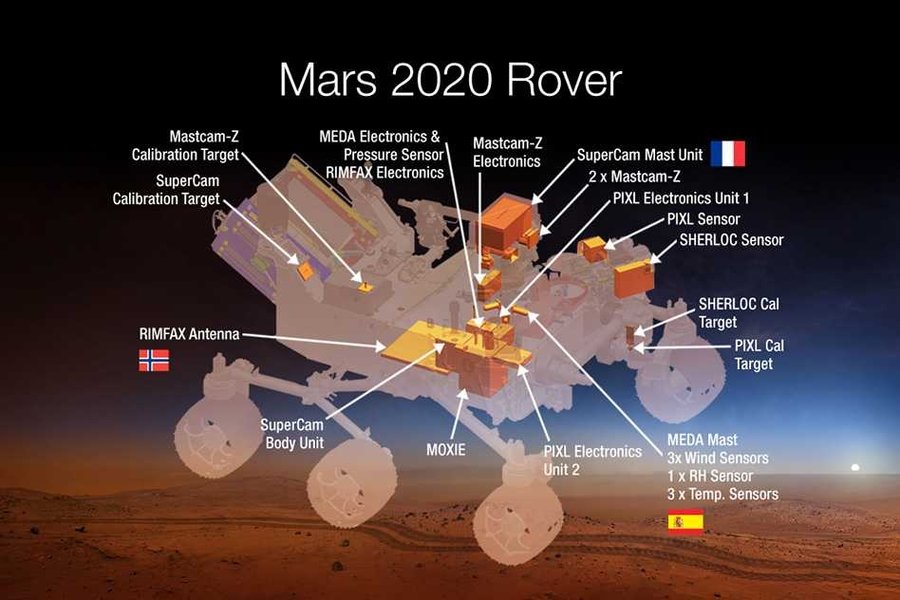
Oxygen may also be a limiting factor for life on Mars. Mars’ atmosphere is 95% carbon dioxide and is only around 0.16% oxygen. However, NASA's MOXIE experiment (Perseverance) in 2021 on the surface of Mars produced oxygen by splitting carbon dioxide. Although the scientific experiment produced very little, it proved feasible for producing larger quantities of oxygen in the future.
Even if scientists work out the issues listed above, humans themselves would still pose a problem. Life on Mars is likely to be a hard experience all around. There is less sunshine, so astronauts may not get as much Vitamin D. Communications would have significant delays, potentially leading to feelings of isolation.
The force of gravity on Mars is also less than Earth’s, which could take a toll on the muscles and bones of humans living there. The colony would have to consider the mental health of its inhabitants as well as their physcial health.
This makes me think of Biosphere 2, which I happened to write about recently. Back in the late 1990s, eight people lived together in a sealed environment in Arizona for two years. Their goal was to discover whether humans can survive inside a self-sustaining life-support system that reuses everything including all the air, water, and food. The results were ironic (oxygen levels would plummet, people would run out of food), and it showed that creating the systems involved in supporting life on Earth isn't so easy.
In many respects, a colony established on Mars would face the same challenges. As with Biosphere 2, it would have to support human life for an extended period while managing the circulation of materials efficiently. It has demonstrated that founding a sealed ecosystem is difficult, even here on Earth.
So, can humans ever live on Mars? I believe the answer is yes, just not in the near future. With continuing rapid progress in science and technology, demonstrated by the exciting success of experiments such as MOXIE and Biosphere 2, we know this is within our reach. But Mars is a stark reminder that there are so many systems that we rely on that are so interconnected and taken for granted.
What I found most astonishing about the process of investigating this topic was not how difficult it is to get to another planet but rather how great of a challenge it is to make a new world livable. We take Earth for granted because we are so familiar with it, but if we do intend to settle another planet, I think we should learn how to take care of this one first. SpaceX’s work with Starship shows that reaching Mars is becoming a more serious goal, not just science fiction, but it also shows how much still has to be solved before humans can actually live there. SpaceX says Starship is being designed to carry crew and cargo to Mars and support a future human presence there.
