Is a Burned Forest Dead Forever?
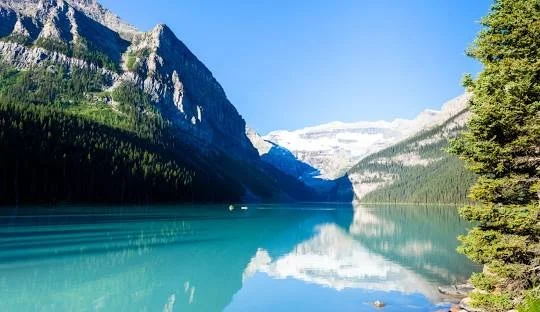
Lake Louise: Banff, Canada
When most people think of Banff National Park, they picture turquoise lakes, snow-capped mountains, and endless evergreen forests. That was exactly what I expected too. Everywhere I looked felt like a postcard.
Then we drove north toward Jasper.
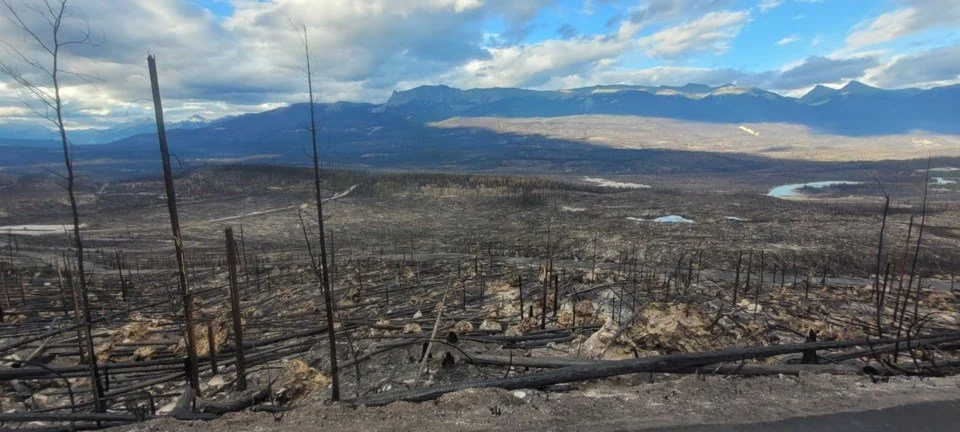
In person, this landscape hits much harder. The image doesn’t give off the same feeling of emptiness…
Almost without warning, the scenery completely changed. The green forests disappeared and were replaced by mountains covered in black tree trunks. The sight was so different from what we had seen before that I just stared out through the blackened trees, imagining the green forest that had once been there.
The scary part was how open everything suddenly felt. Before, the dense forests made it impossible to see more than the first few rows of trees before the rest of the landscape disappeared into green. Here, almost everything was gone. I could see straight through the blackened trunks, but there was nothing beautiful waiting behind them—only mountain after mountain, dark, desolate, and seemingly without life.
The reason was the 2024 Jasper wildfire, one of the most destructive wildfires in the park's history. Seeing pictures online is one thing, but driving through the burned landscape was something entirely different. It was hard to imagine that such a beautiful forest could change so dramatically in such a short time.
As I learned more, though, I realized the story wasn't simply about destruction.
But the truth is that wildfires are a natural part of the forest ecosystem. They help to clear out old plant species, restore nutrients in the soil, open up the forest canopy and allow light through, thus making room for other plants to grow. And there are many plants and even animal species that have become adjusted to such processes over the past millennia. To some extent, fire resets the whole process of forest development.
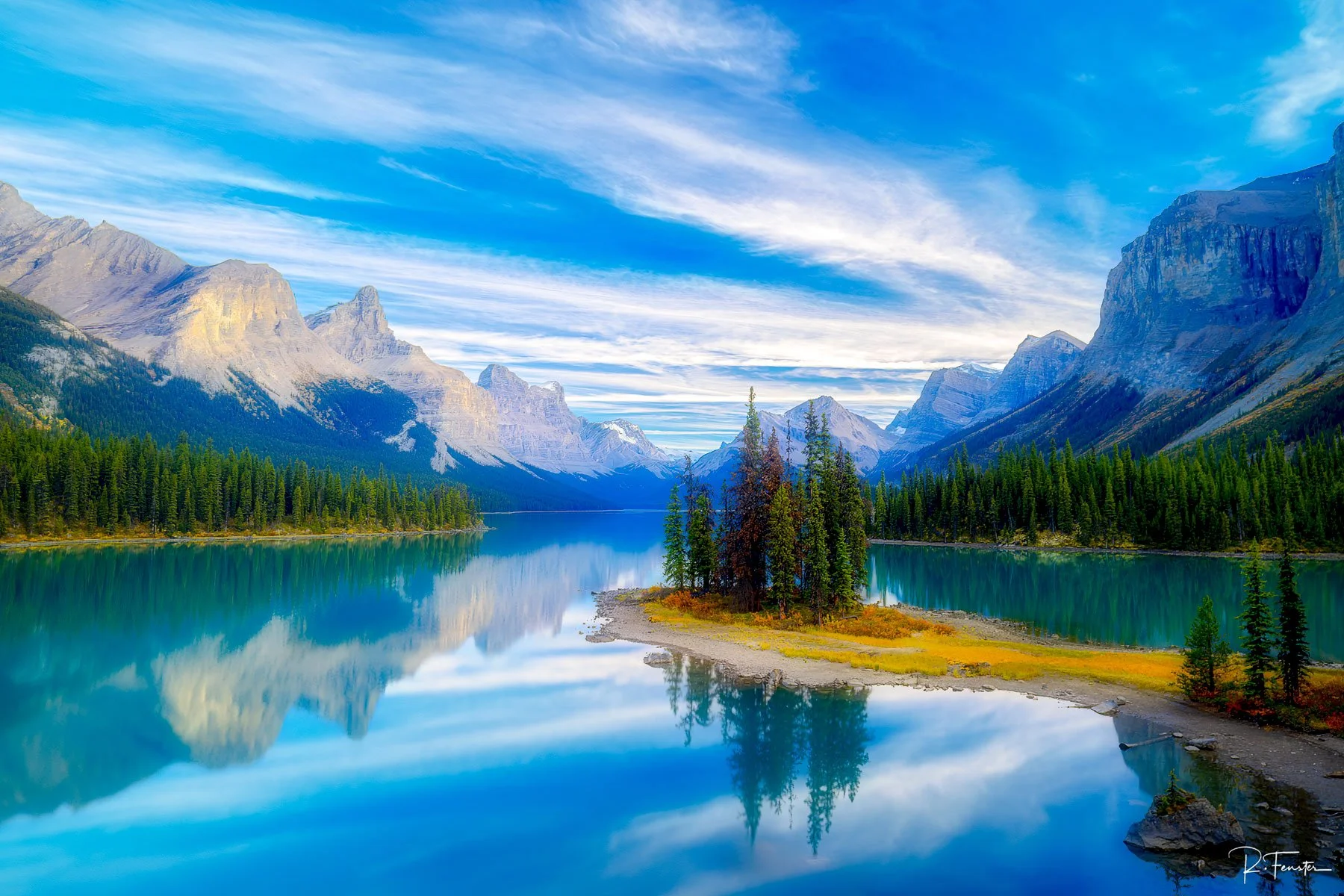
Hall of the Gods — Explorer Mary Schäffer gave this name to the mountains surrounding Maligne Lake, saying each peak looked like a throne where the gods might sit. Today, the landscape remains both a natural wonder and a place of deep cultural significance.
The problem is that nowadays, because of global warming, all wildfires tend to be larger and more severe than those of the past times. This results in less and less possibility for the forest ecosystem to be able to restore itself. Looking at such damaged mountain slopes gave me quite a realistic vision of the problem of global warming.
Another memorable part of the trip was visiting Spirit Island at Maligne Lake. While being one of the most frequently visited places in the country, Spirit Island has a deep spiritual significance for the Stoney Nakoda First Nation. According to the beliefs of the First Nations, there is life in the lake, in the mountains, in the animals, and in the forests, with the surrounding mountains being the ancestors and Spirit Island being the spirit of the lake. Sometimes, this island is left reserved to conduct private ceremonies and pray on it.
At the same time, we understood from the explanation that the prayers could also involve the fires. After learning what these wildfires mean for the people of Jasper and seeing the consequences of the fire by ourselves, the prayers become especially meaningful. Ecologically, the fire marks the beginning of the forest succession. But from the viewpoint provided to us by the First Nation, the burning forest becomes the forest where people pray and worship.
Spirit Island showed me that being healed by a fire means not only regrowth of vegetation but also restoring the connection of humans to nature. National parks are not merely natural attractions and protected areas. They are areas with strong cultural significance where ecology and culture stay closely tied.
Before visiting Banff, I considered national parks as merely nature attractions. I knew there had been fires in Canada, mainly because of the terrible air caused by the smoke, but aside from that, I didn't know what effect the fires had on the landscape. After visiting Banff, Jasper, and other places, I got a new view of them. It opened my eyes to what was happening to nature around me. The forest is always in the process of regeneration and adaptation. The seemingly dead landscape is merely starting the next cycle of its ecologic history.
