π in Biology
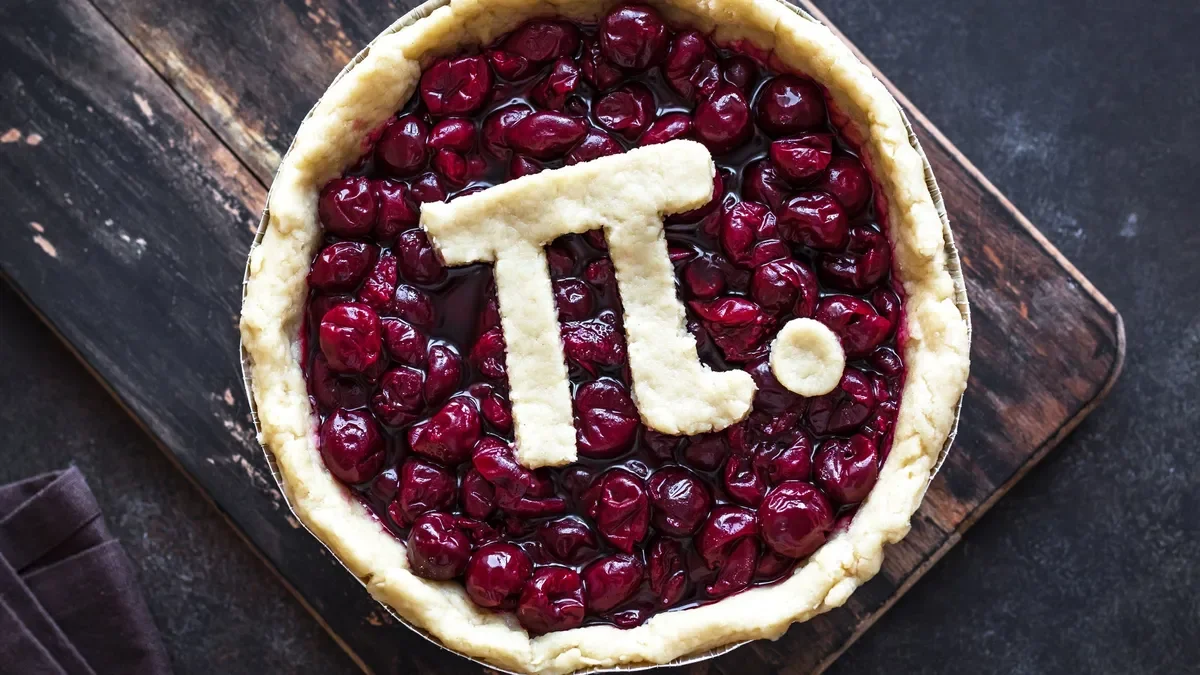
Every year on March 14, people around the world celebrate Pi Day, honoring the famous number π (pi), approximately 3.14159. In mathematics, π describes the relationship between a circle’s circumference and its diameter. At first glance, π might seem like a concept that belongs only in geometry classrooms or physics equations.
But surprisingly, π also appears in biology. Many structures and processes in living organisms involve curves, circles, and cylindrical shapes, and whenever circles appear, π is never far behind. From cells to blood vessels to the way organisms exchange materials with their environment, this mathematical constant quietly helps describe how life works.
Many biological structures have shapes that are close to circular or spherical. For example, cells are often roughly spherical because this shape efficiently encloses volume while minimizing surface area. Scientists studying cells frequently calculate quantities such as surface area and volume, and those calculations involve π.
Understanding these relationships is important because the ratio between a cell’s surface area and its volume affects how efficiently it can exchange nutrients, oxygen, and waste with its surroundings. This is one reason why cells remain relatively small — the mathematics of geometry, involving π, limits how large a cell can grow while still functioning efficiently.
Let’s look at one fascinating pattern found in the life sciences. The appearance of an organism’s body plan — a process called morphogenesis — is one of the most striking features of living things. During development, an embryo grows from a nearly uniform group of cells into a complex organism with organized structures such as a brain, backbone, and limbs.
In 1952, mathematician and computer science pioneer Alan Turing proposed a mathematical model explaining how these patterns could form. He suggested that patterns emerge through the interaction of chemicals called morphogens that diffuse through tissues. In the simplest case, two types of morphogens interact: an activator, which promotes local growth, and an inhibitor, which spreads farther and suppresses growth nearby.
Even this simple interaction can generate a surprising variety of patterns. Mathematical models show that it can produce spots, stripes, and repeating structures, helping explain patterns such as zebra stripes, leopard spots, and pigmented markings in tissues.
So where does π come in?
Although π is famous as the number that describes circles, it also appears in the mathematics used to describe waves, spacing, and repeating patterns. These mathematical relationships help determine the size and spacing of biological patterns. In other words, the stripes of a zebra or the spots of a leopard follow mathematical rules that often involve π.
Seeing π appear in biology reminds us that life follows the rules of mathematics and physics. Biological systems may seem messy and complex, but underlying them are simple principles of geometry and structure.
Mathematics allows scientists to:
model biological systems
predict how organisms grow or function
design medical treatments and technologies
understand patterns in nature
Even a number discovered through studying circles thousands of years ago can help explain how cells function or how blood flows through the body.
Pi is often introduced as a purely mathematical idea, but the natural world constantly reveals its presence. Whenever life forms create shapes involving circles, curves, or cylinders, π becomes part of the story.
So on Pi Day, it’s worth remembering that π isn’t just a number on a chalkboard. It’s also quietly woven into the geometry of life itself. Now go enjoy yourself a pie on Pi day!
Thanks for reading this post! I hope you learned something new today.
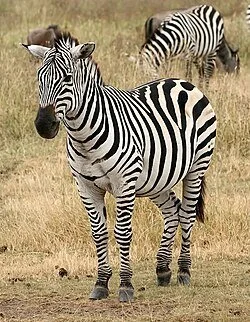
Zebra’s Stripes
Pi determines the constant spacing of a zebra’s stripes!