How Many FPS Can the Human Eye See?

Gamers spend a lot of time thinking about frame rate. People complain about their frame rate because even a small difference can mean a lot in game. Gamers are always finding ways to improve their setups so they can perform to the best of their abilities. However, an interesting question arises. At what point does increasing frame rate stop having a visible effect? Does your eye contribute to this?
The problem with these questions is that the human eye does not actually work in frames.
A computer creates a series of individual images and displays them one after another. If a game is running at 60 frames per second, the computer is producing about 60 new images every second. At 120 FPS, it produces twice as many. Our eyes, however, do not take 60 or 120 separate pictures every second. Instead, they continuously respond to incoming light, while the brain processes those signals into the moving world that we perceive.
So rather than asking, “What is the frame rate of the human eye?” a better question is:
At what point do additional computer frames stop making a noticeable difference to us?
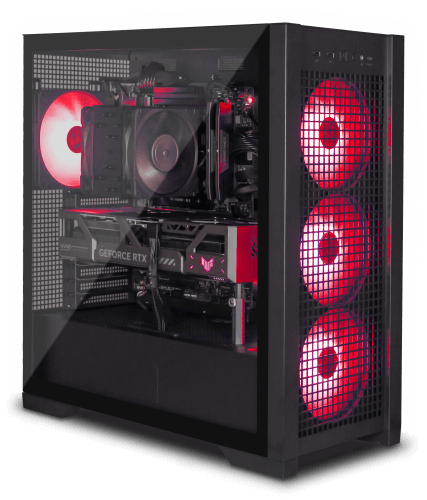
Imagine playing a game on a powerful gaming PC. The GPU might be producing 300 FPS, but that does not mean your eyes are receiving 300 completely new images every second.
The signal has to travel through several stages:
Game → GPU → Monitor → Eyes → Brain
Every stage has its own limitations.
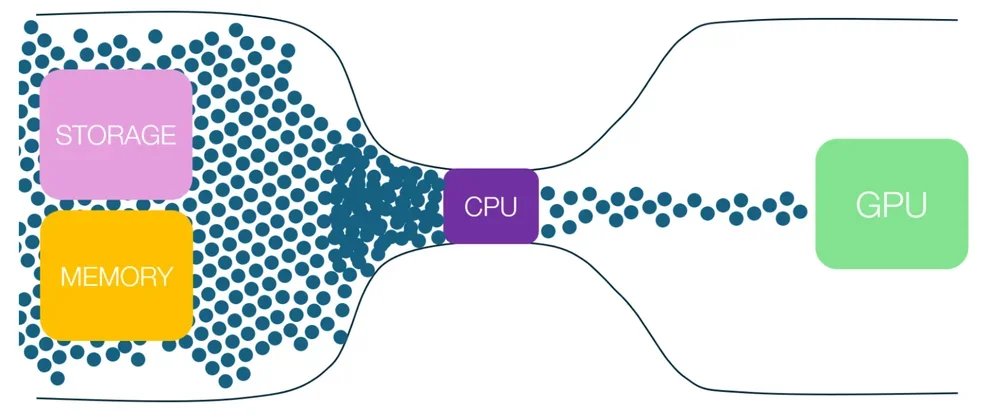
Suppose your GPU produces 300 FPS, but your monitor is only 60 Hz. The monitor can refresh its image only about 60 times per second. Most of those extra frames created by the GPU therefore cannot be displayed as complete new refreshes. In this situation, the monitor becomes a bottleneck.
It is similar to pouring water through a funnel. It does not matter how quickly you pour water into the top if the opening at the bottom can only let a certain amount through.
That is why upgrading from 60 FPS to 144 FPS makes far more sense when you also have a 144 Hz monitor.
Now imagine an extreme computer capable of producing 10,000 FPS connected to a hypothetical 10,000 Hz display. Would that look 100 times smoother than 100 FPS? Definitely not. At some point, the visual system itself limits how useful additional frames become. The cells in the retina need time to respond to changes in light, signals must travel through the optic nerve, and the brain must process that information. However, there is no single FPS number where the human eye suddenly stops seeing improvements. People sometimes claim that humans can only see 30 FPS or 60 FPS. That is misleading. Gamers can often notice substantial differences between 60 Hz and 120 or 144 Hz, and under the right conditions people can distinguish even higher refresh rates.
The improvement simply becomes progressively smaller.
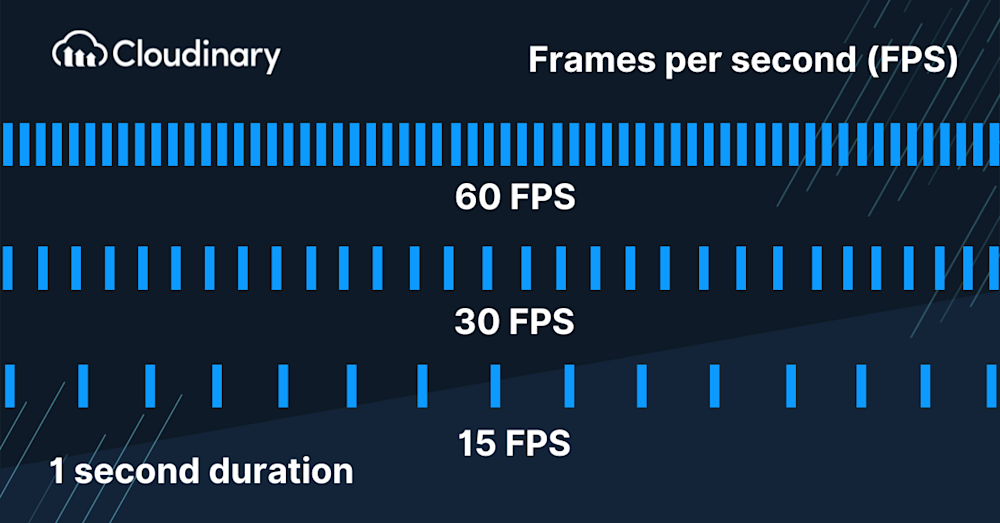
Going from 30 FPS to 60 FPS is usually extremely noticeable.
Going from 60 FPS to 120 FPS is also easy for many people to notice.
Going from 120 FPS to 240 FPS can still improve motion clarity and responsiveness, especially in fast games.
But going from 1,000 FPS to 2,000 FPS would not suddenly make the game look twice as smooth.
FPS becomes easier to understand when we convert it into the amount of time each frame lasts.
At 30 FPS, one frame lasts about 33 milliseconds.
At 60 FPS, it lasts about 16.7 milliseconds.
At 120 FPS, about 8.3 milliseconds.
At 240 FPS, about 4.2 milliseconds.
At 480 FPS, about 2.1 milliseconds.
Going from 30 to 60 FPS removes about 16.7 milliseconds between frames. Going from 240 to 480 FPS removes only about 2.1 milliseconds. The FPS number may have doubled both times, but the actual improvement in time becomes much smaller. This helps explain why higher FPS continues to have benefits while becoming increasingly difficult to notice.
There is another interesting difference between computers and humans. What you consciously see is not simply raw information arriving directly from your eyes. Your brain is constantly processing, combining, and interpreting visual signals. It uses information from moments immediately before and after one another to understand motion, recognize objects, estimate depth, and predict where moving objects are going. In a loose sense, this is somewhat like buffering, although the brain does not literally store frames like a computer video buffer. Imagine seeing a hockey puck fly across the ice. Your brain does not receive thousands of perfectly separated photographs of the puck. Instead, it receives constantly changing visual signals and reconstructs the puck's motion from them.
That is one reason human vision cannot be described with a simple FPS counter. The eye detects changing light. The brain creates perception.
There is also another reason competitive gamers want extremely high FPS even when the visual difference becomes small: latency. Imagine that you move your mouse. The game must detect the movement, calculate the new camera position, render a new frame, send that frame to the monitor, display it, and finally allow your visual system to detect the change. Every stage adds some delay, just like in the hockey puck example.
So the complete system looks more like:
Mouse → CPU/Game → GPU → Monitor → Eye → Brain → Reaction
Higher frame rates shorten one part of this chain because the computer has more opportunities each second to produce an updated image.
At 60 FPS, a new frame appears roughly every 16.7 milliseconds.
At 240 FPS, a new frame appears roughly every 4.2 milliseconds.
Even if the difference in smoothness becomes harder to notice, reducing several milliseconds can still matter in games such as Fortnite, Valorant, or Counter-Strike, where players react to events extremely quickly
So what is the FPS of the human eye?
There really isn't one.
The human visual system is not a camera, and the brain is not a monitor. Vision is a continuous biological process involving the eyes, neurons, and brain. Instead of imagining the eye as having something like a 60 FPS maximum, it is more useful to imagine the entire gaming experience as an information pipeline. Eventually, though, technology reaches the limits of biology. Each additional frame contains less new information that our visual system can actually take advantage of.
