Why are worms all over the pavement after it rains?
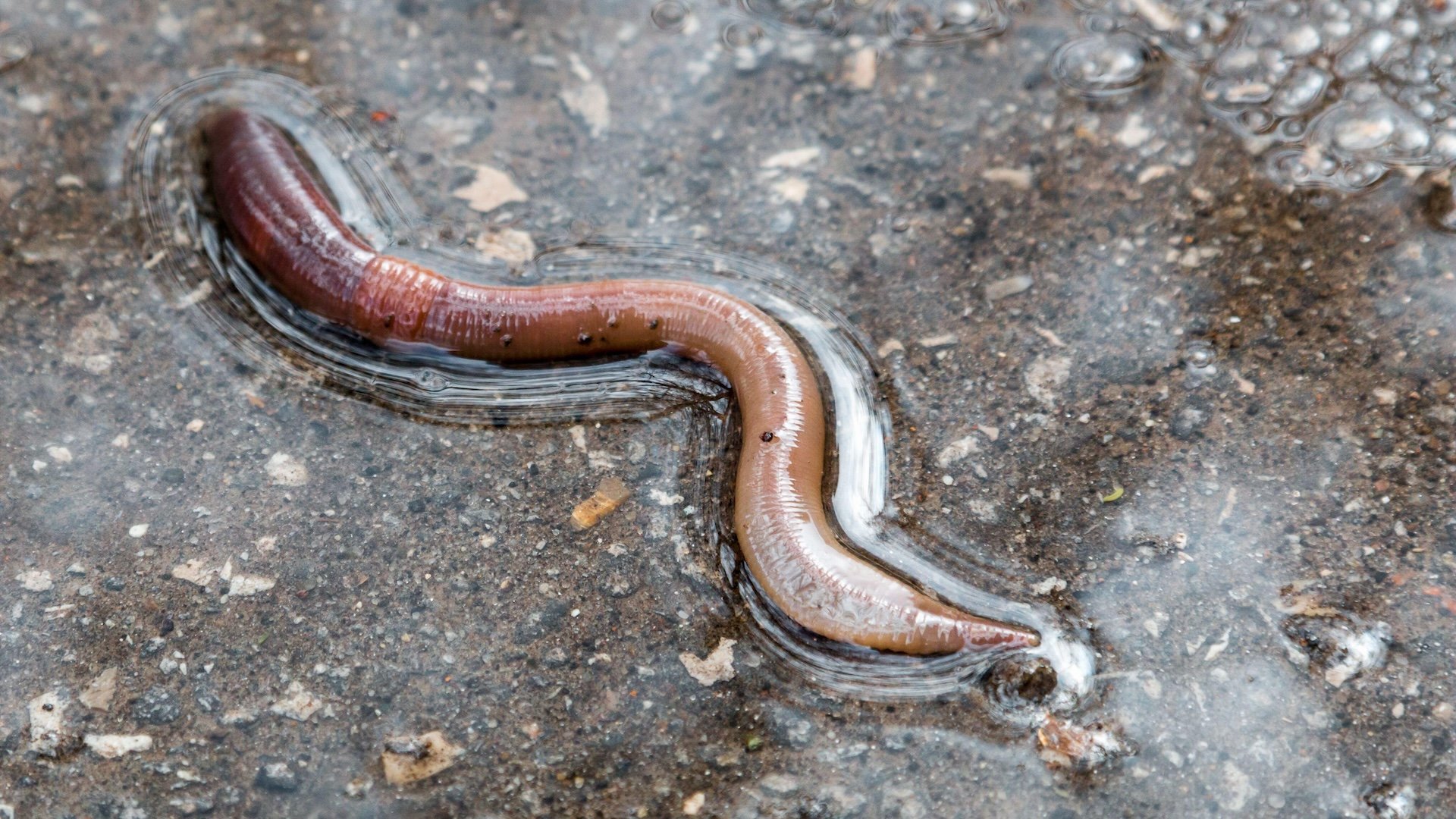
Recently, it has been raining a lot where I live, and after nearly every storm, worms seem to appear all over the sidewalks and driveways. Some are still slowly moving across the pavement, while others become stranded in puddles or begin drying out once the rain stops. I had always assumed that the rain accidentally flooded them out of the soil. However, seeing so many of them made me wonder whether they were actually being forced aboveground or whether coming to the surface served some ecological purpose.
The most common explanation is that earthworms emerge to avoid drowning. This idea is not completely wrong, but it is oversimplified. Earthworms do not have lungs. Instead, oxygen passes through their moist skin and enters their bloodstream. After heavy rain, water fills many of the air spaces within the soil, reducing the amount of oxygen immediately available underground. Research has found that certain earthworm species tolerate these conditions poorly and are more likely to emerge after heavy rainfall. However, other species can survive in waterlogged soil, or even breath in oxygenated water like fish, for long periods. Therefore, not every worm on the sidewalk is escaping immediate suffocation.

Rain may actually create an opportunity for earthworms to travel. On a dry day, crawling aboveground would be extremely dangerous because an earthworm’s skin could quickly lose moisture. After rain, however, the wet surface allows worms to remain moist while moving much faster than they could by burrowing through compact soil. Some earthworm species may use these conditions to disperse into new areas, locate better soil, or find mates. From the worm’s perspective, a rainy night may function less like an emergency evacuation and more like a temporary travel window.
The rain itself might also signal earthworms to emerge. Earthworms are highly sensitive to vibrations moving through the soil. In a practice known as “worm grunting,” people create low-frequency vibrations in the ground, causing worms to rapidly rise to the surface. Experiments suggest that this response may have evolved as a defense against burrowing predators such as moles. Because falling raindrops also produce vibrations, rainfall could help trigger a similar response, although it probably does not explain every case of post-rain emergence.
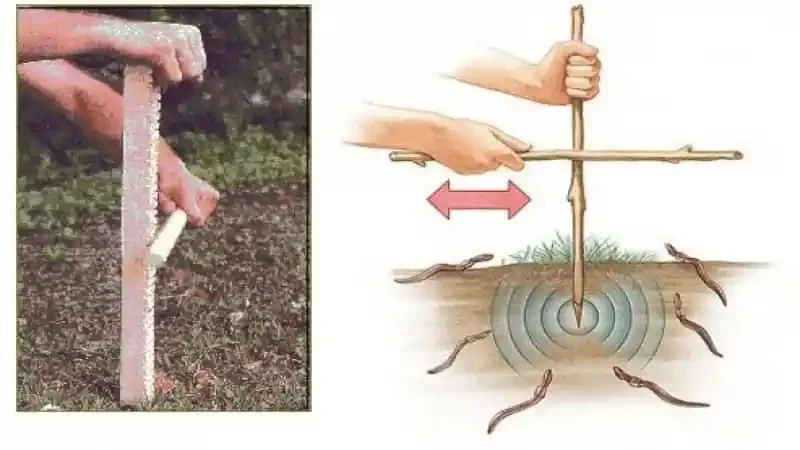
Worm grunting is a traditional method used to lure earthworms to the soil surface by driving a wooden stake into the ground and rubbing it with a metal flat bar or another stick to create low-frequency vibrations.
This means that the worms probably do not end up aboveground entirely by accident. Surfacing can help them escape low-oxygen soil, respond to possible danger, or move into a new habitat while the ground is wet. What is likely unintentional is ending up on a sidewalk. A recently soaked sidewalk may initially provide enough moisture for movement, but it offers no soil, leaf litter, or shelter. Once the rain ends, the pavement can quickly become a dangerous dead end.
The worms scattered across the pavement are therefore responding to real environmental signals, even if those signals sometimes lead them into a human-made obstacle. What first looked like worms randomly washed out by rain is actually an example of how animals make use of brief changes in their environment. Rain does not simply change the weather aboveground—it temporarily transforms the conditions, risks, and opportunities within an entire hidden soil ecosystem.
